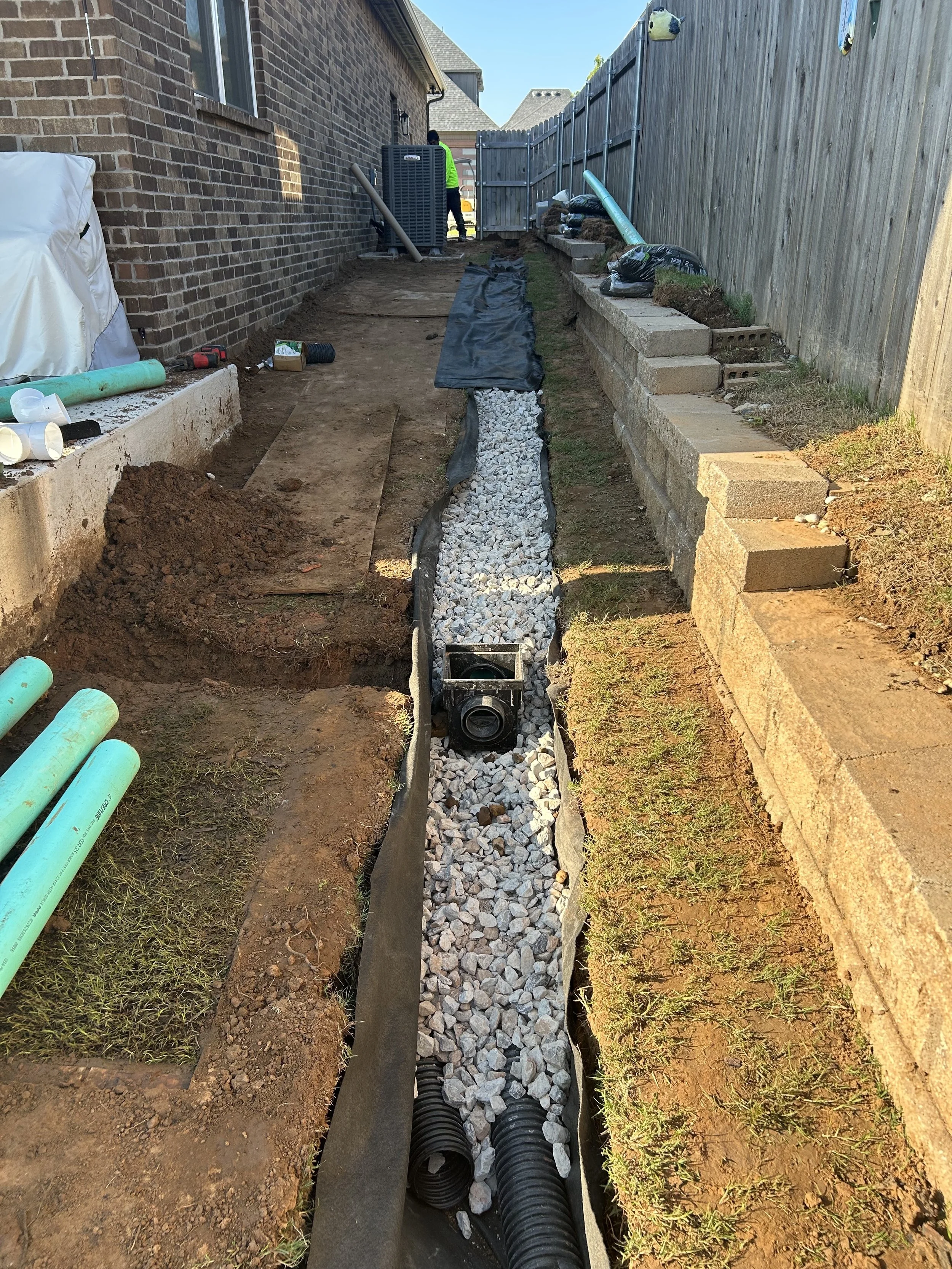
A backyard under construction with a gravel trench filled with white rocks, black corrugated piping, and construction tools. There is a brick house on the left and a wooden fence on the right. Construction materials and equipment are scattered around.

Drainage Systems Designed Just for Your Property

No two properties drain the same, which is why we don't believe in one-size-fits-all drainage solutions. Every project is carefully evaluated to understand how water moves across your property, allowing us to design a system specifically tailored to your needs.

We combine the right solutions to eliminate standing water, protect your foundation, and prevent future flooding. Our drainage systems are built for long-term performance, giving you confidence and peace of mind every time it rains.
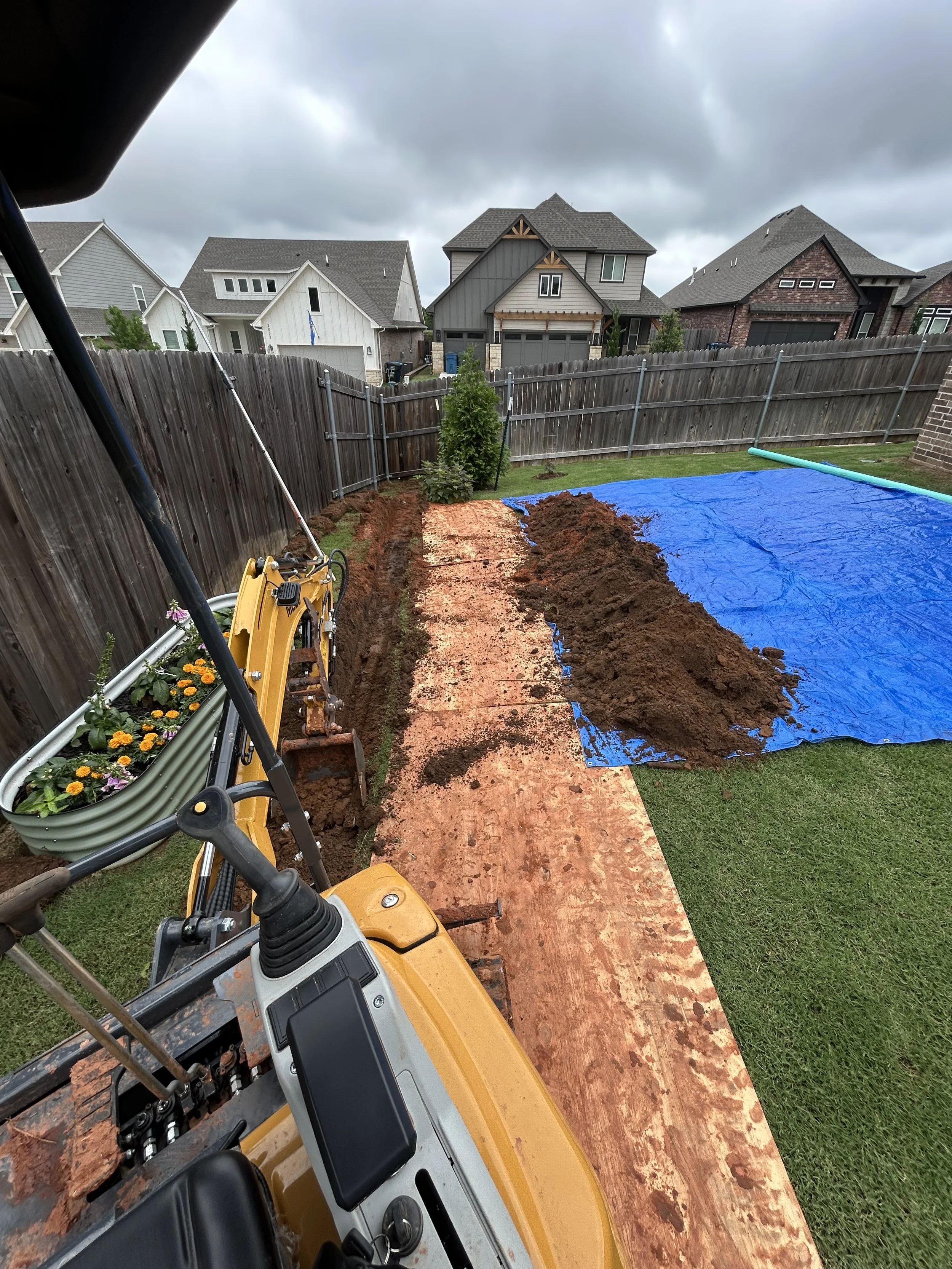
  • A backyard scene showing a wooden fence, flower beds, and a yard covered with a blue tarp and dirt, with construction equipment and tools visible in the foreground.

    Drainage Services

French Drainage

A French drain is an underground drainage system designed to collect and redirect excess groundwater away from your home, foundation, yard, or retaining wall. It consists of a deep trench below the frost line, a perforated pipe surrounded by drainage rock and protective fabric, allowing water to enter the system and flow safely away from problem areas. Being below the frost line allows French drains to work 365 days of the year, constantly moving water.
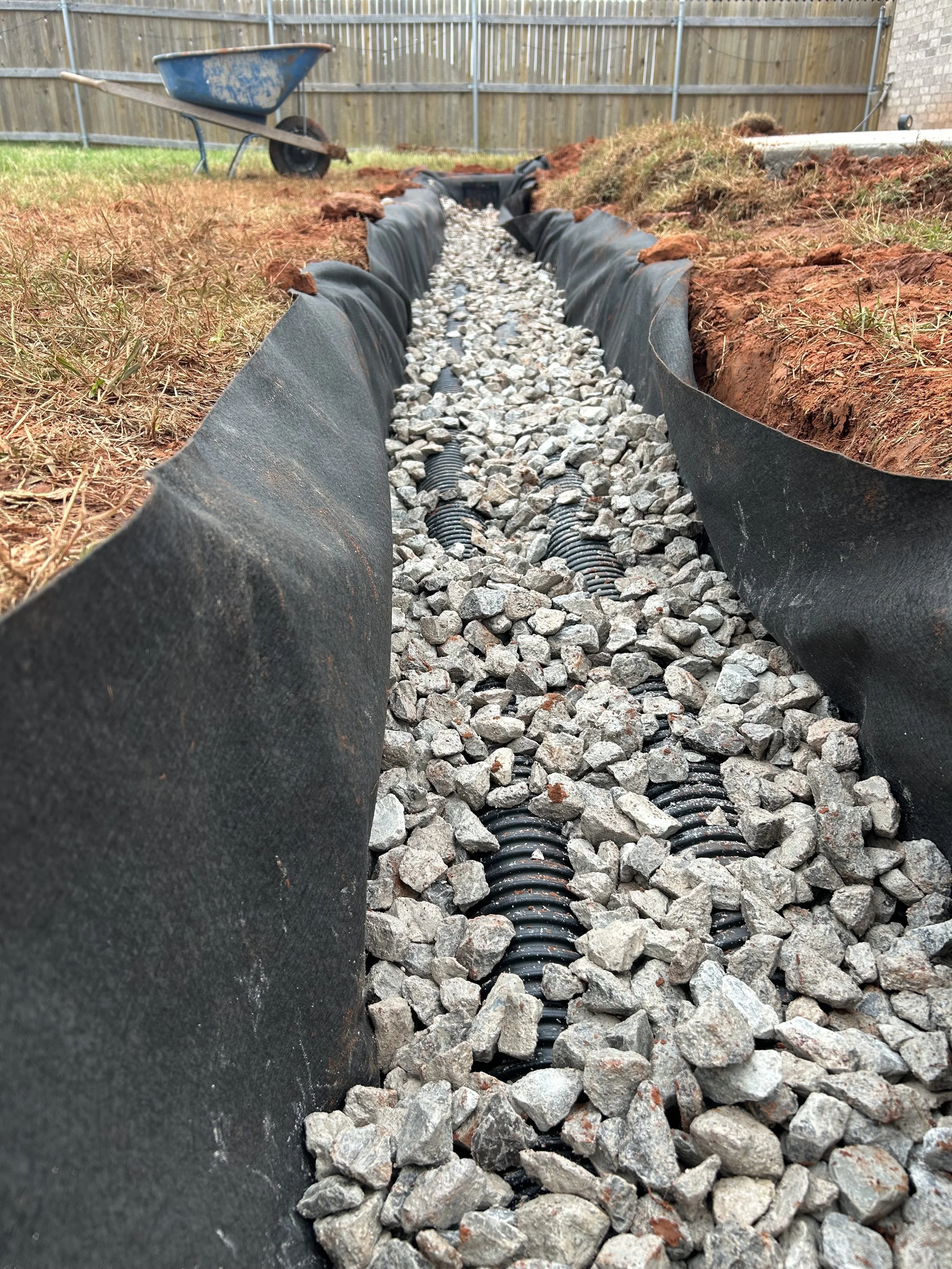
A trench filled with a geogrid fabric, gravel, and black tubing, with a wheelbarrow nearby and a wooden fence in the background.

Signs You Need a French Drain

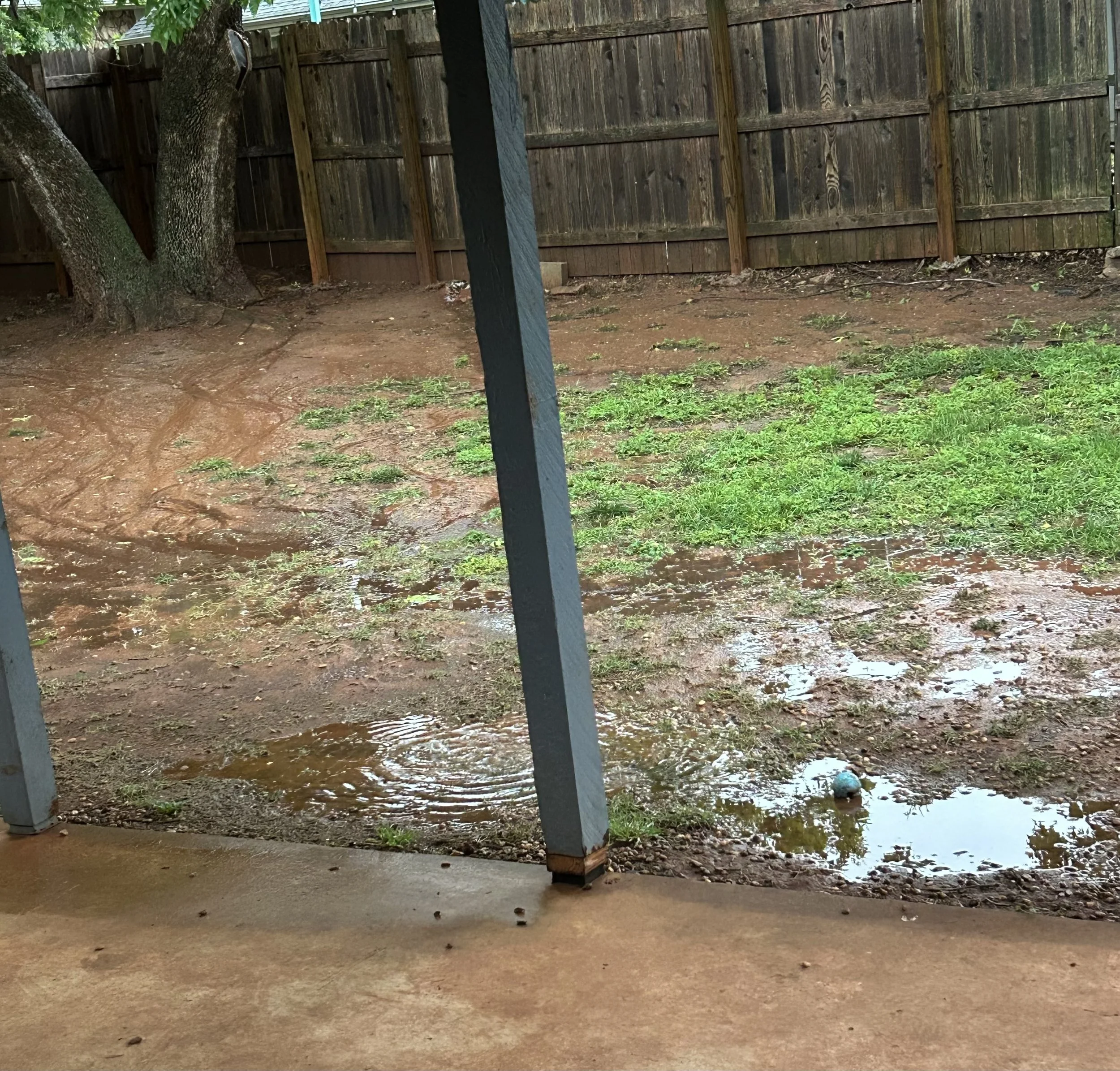
A backyard with a muddy patch of ground, a tree, a wooden fence, and a black vertical post.

Standing Water

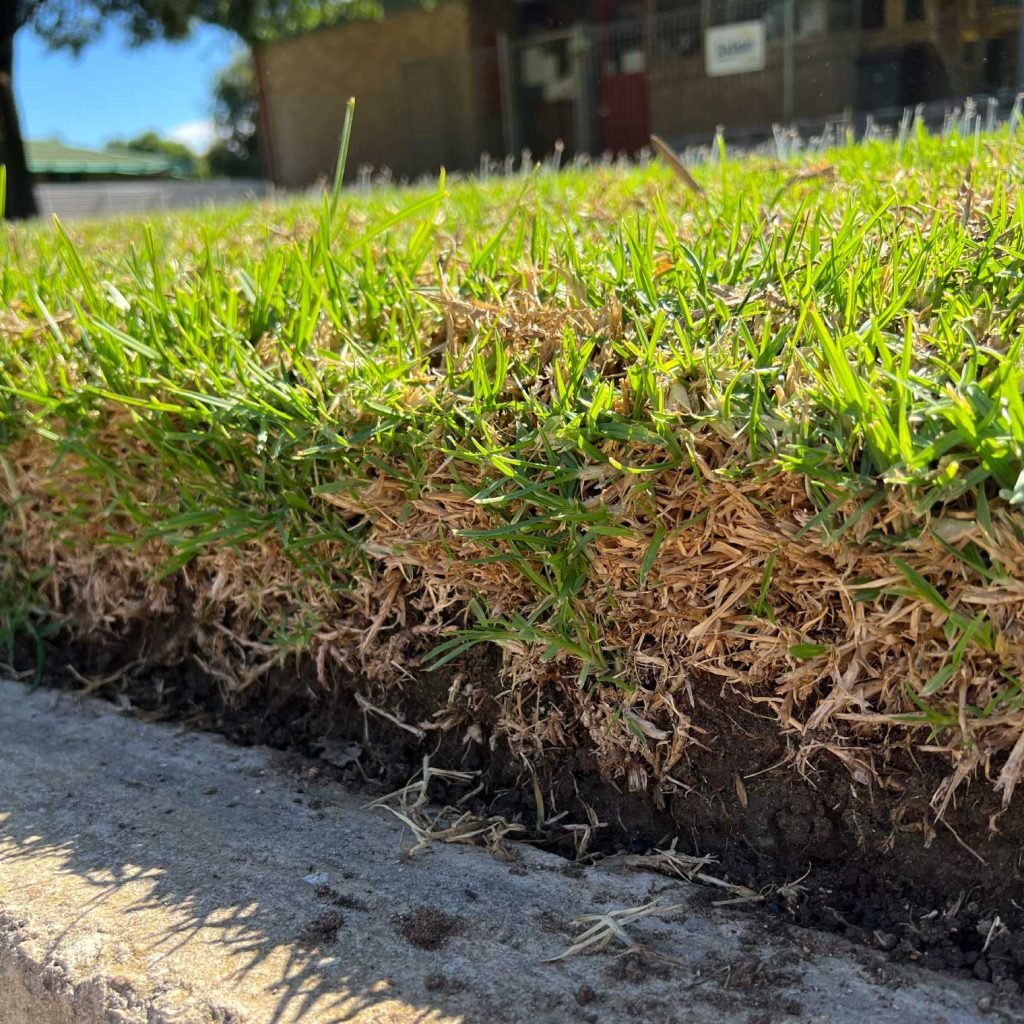
Close-up of a patch of green grass growing along the edge of a concrete sidewalk, with some dry and brown grass at the border, and a blurry building and trees in the background under a sunny sky.

Sponge Lawn

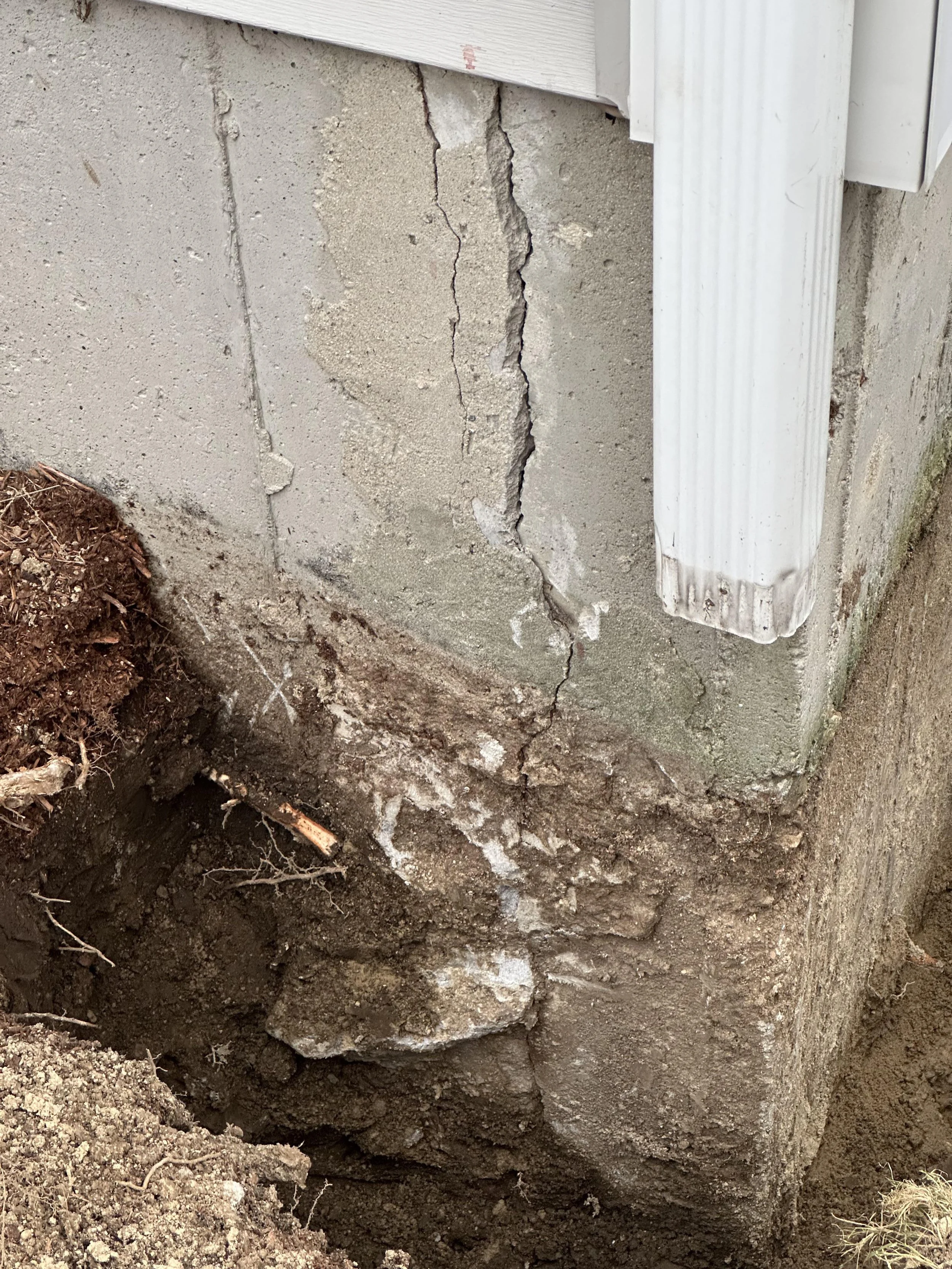
Close-up of a cracked concrete foundation wall with exposed soil and roots at the base, next to white siding and a section of a white downspout.

Foundation Issue

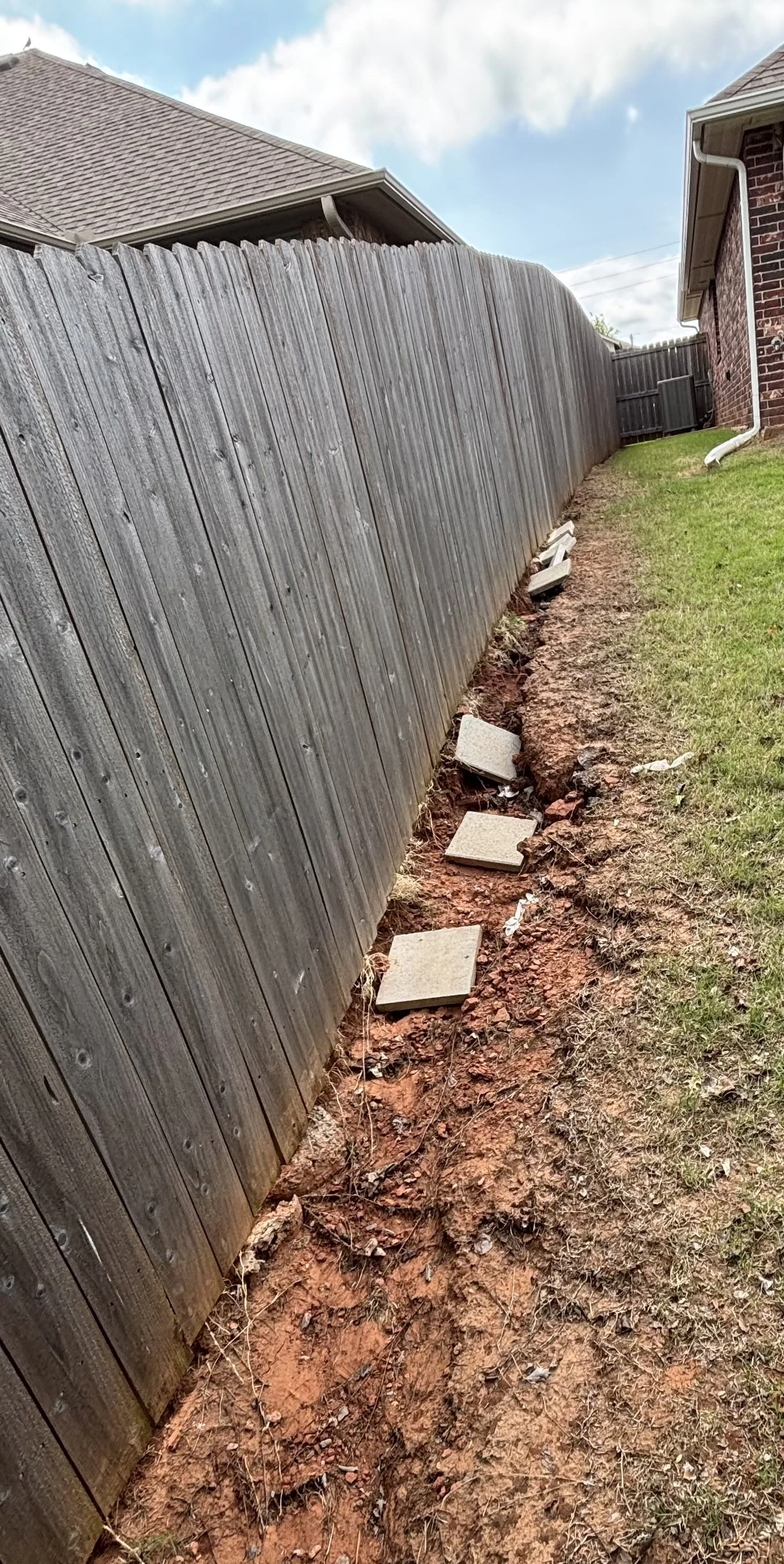
A wooden fence with some missing and replaced concrete stepping stones on the ground along the fence line, with a brick house on the right side and partly cloudy sky overhead.

Erosion

Surface Drainage

Surface drainage systems are designed to quickly collect and redirect water from the ground surface before it causes damage.

Using catch basins, channel drains, and underground piping, surface water is captured and safely discharged away from your home, foundation, driveway, or landscape.

A properly designed surface drainage system provides reliable protection during heavy rainfall and storm events.
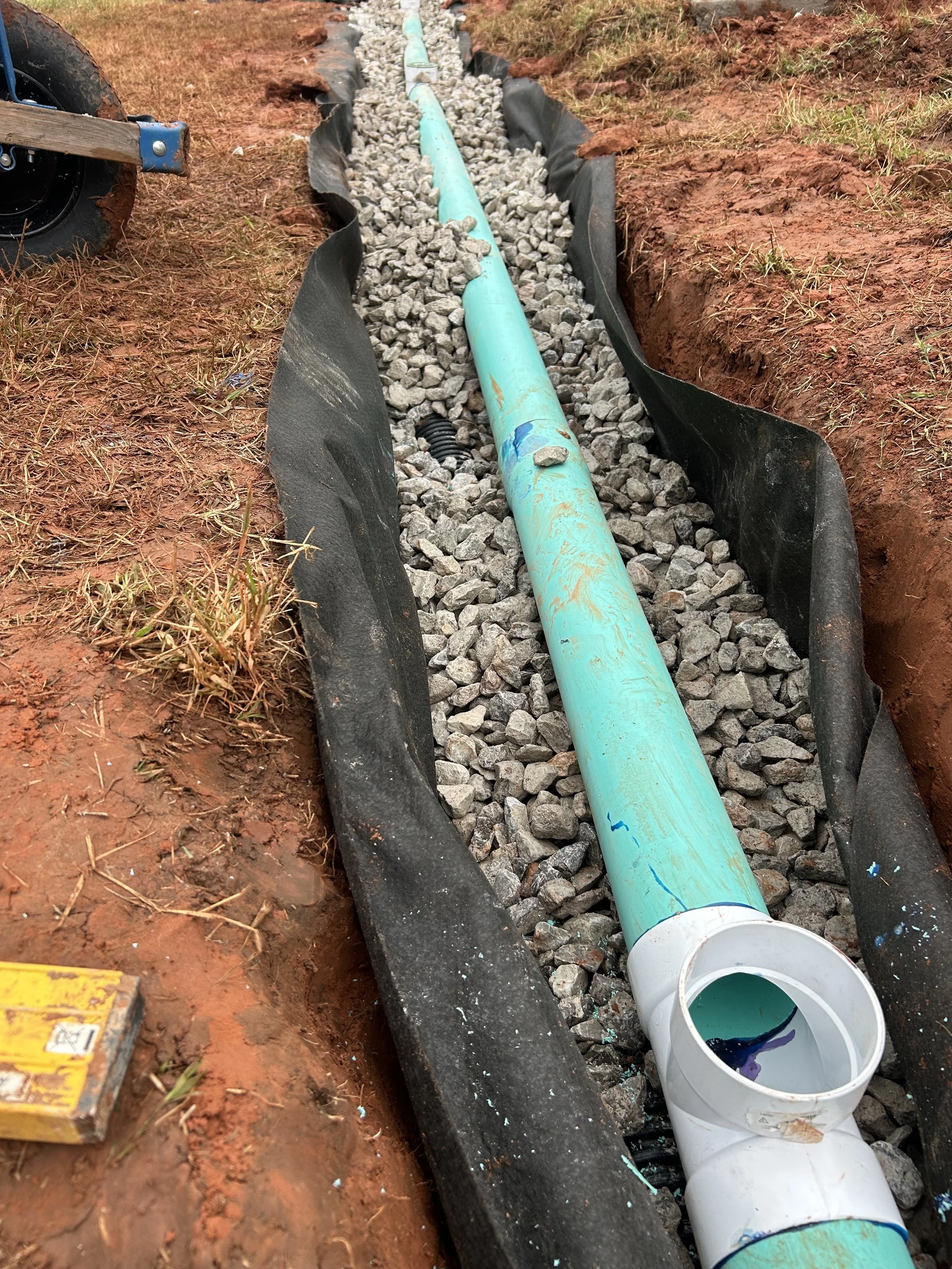
A construction site showing a new water pipe installation. A large turquoise pipe runs through a trench filled with gray gravel, lined with black plastic, with a white PVC pipe fitting at the end, and a bucket filled with purple dye nearby.
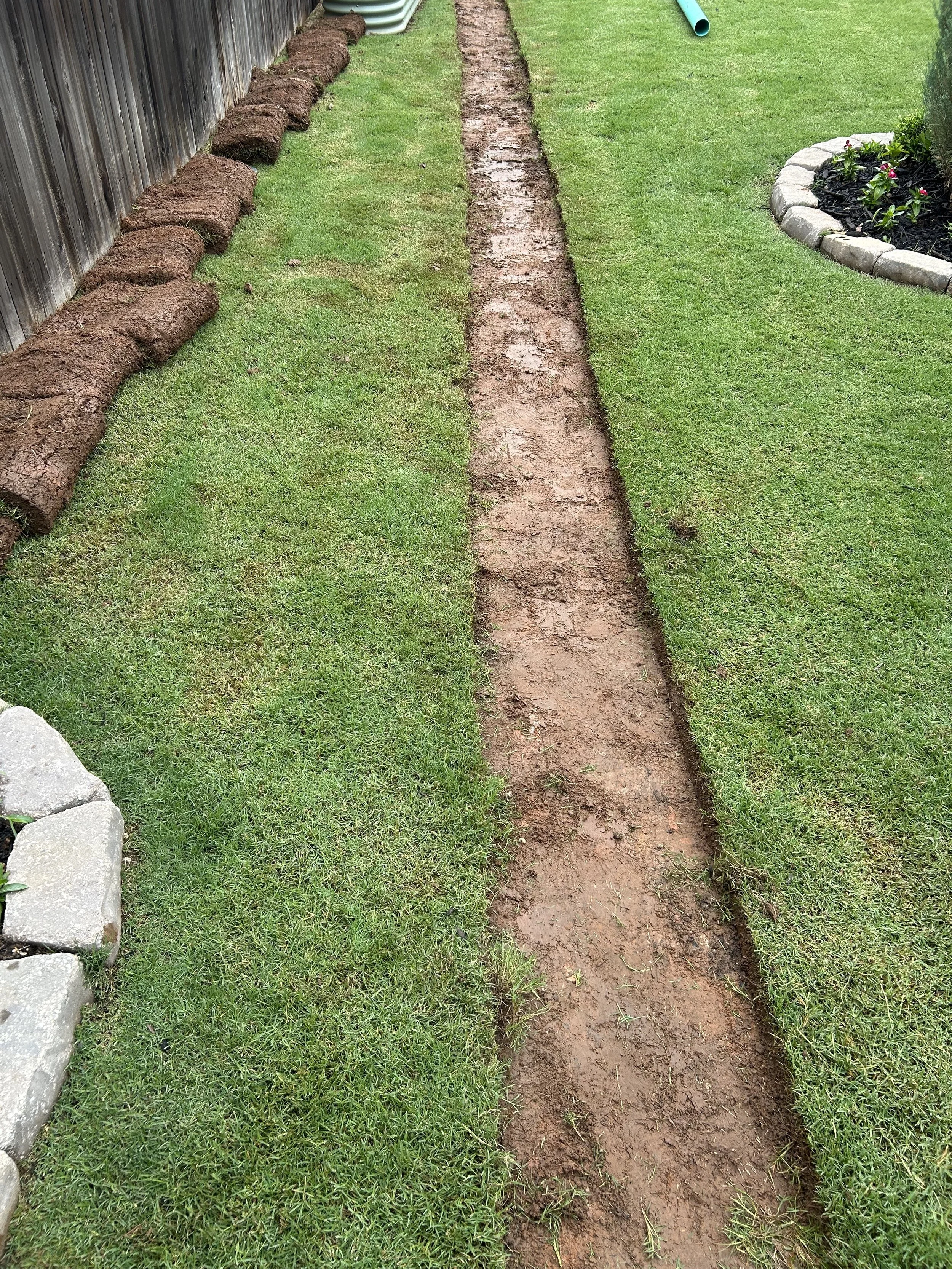
A garden with a narrow dirt pathway running through the grass, bordered by a wooden fence on the left and a flower bed with rocks on the right.

Prevent

  • Standing Water

  • Reduce Erosion

  • Protect Structures From Water Damage

  • Minimize Muddy Areas

  • Improve the Overall Appearance and Usability of Your Property.

Dry Wells
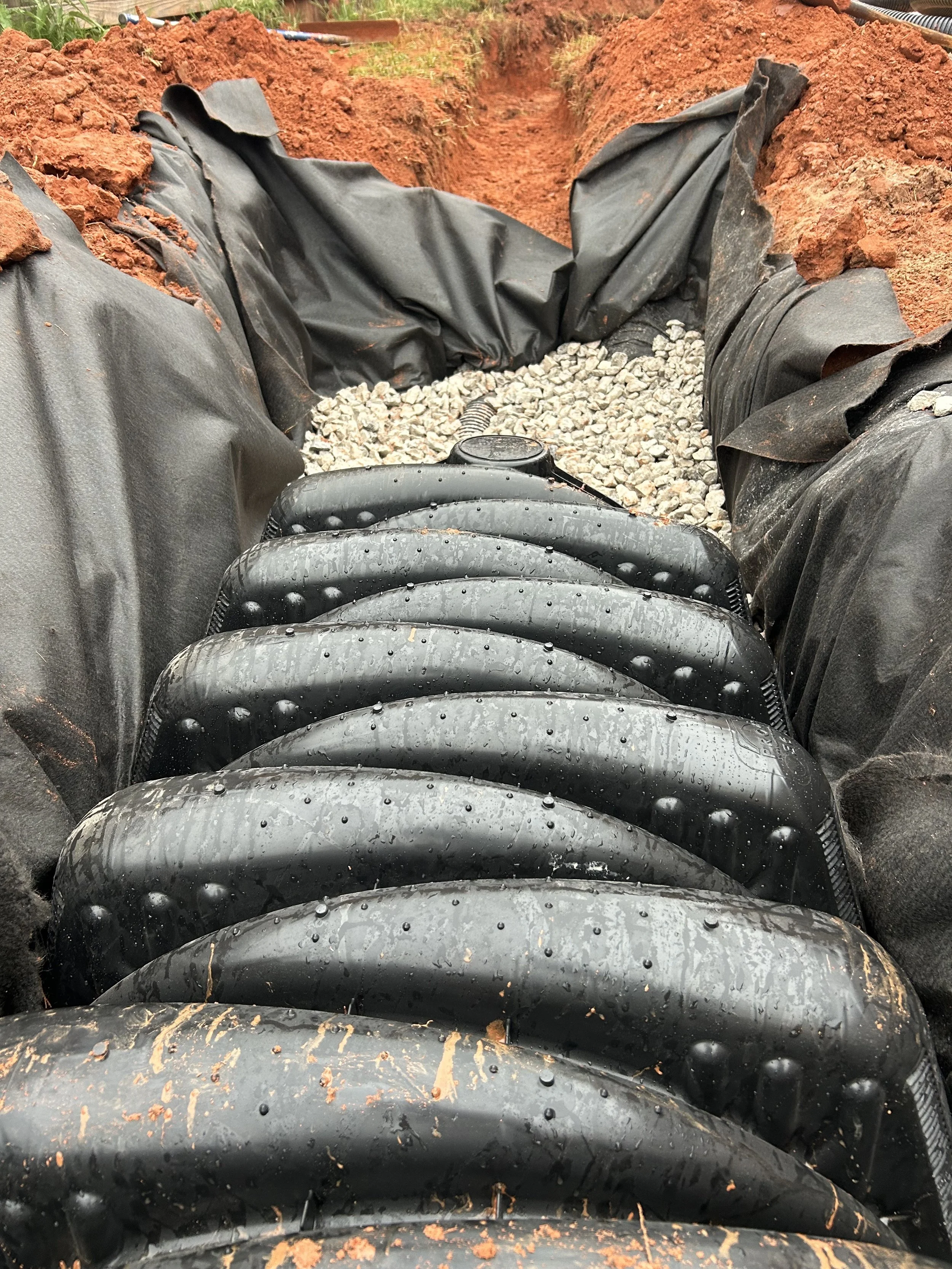
Close-up of black pond liners and a drainage pipe laid out in a trench, with dirt and gravel visible, likely as part of a pond or water feature installation.

A dry well is an underground stormwater management system designed to collect, temporarily store, and gradually disperse excess water into the surrounding soil. Dry wells are commonly used to manage runoff from downspouts, French drains, surface drainage systems, sump pumps, and low-lying areas that experience standing water. By allowing water to infiltrate naturally into the ground, dry wells provide an effective solution when a suitable discharge location is unavailable or impractical.